Günter Hainzl · Werkgruppen

Firescapes / Verbrannter Atem

Arbeiten mit Feuer, Holz, Schellack, Asche und Zeit. Landschaft erscheint nicht als Abbild, sondern als Spur von Eingriff, Verletzung, Transformation und möglicher Erneuerung.

Einführung

Über mein Arbeiten

In meinen Arbeiten interessiert mich die Landschaft nicht nur als äußerer Raum, sondern als verletzlicher Körper, als Gedächtnis und als Prozess. Materialien sind dabei nicht bloß Träger eines Bildes. Sie handeln mit. Sie reagieren, verändern sich, setzen Widerstand entgegen und machen Zeit sichtbar.

Ich arbeite mit natürlichen Pigmenten, Holz, Feuer, Schellack, Asche und gefundenen Spuren. Dabei entstehen Bilder und Objekte, die zwischen Malerei, Prozess, Installation und Dokumentation stehen. Das Werk ist nicht vollständig kontrollierbar. Es entwickelt sich aus einer Begegnung zwischen Material, Geste, Zufall und Konzentration.

Mich interessiert eine Kunst, die nicht nur zeigt, sondern berührt: durch ihre Oberfläche, ihre Verletzlichkeit, ihre Stille und ihre Nähe zu ökologischen Fragen. Die Arbeiten sprechen von Zerstörung, Erschöpfung und Wandel – aber auch von der Möglichkeit, im Prozess des Vergehens eine neue Aufmerksamkeit zu finden.

Werkgruppe

Firescapes

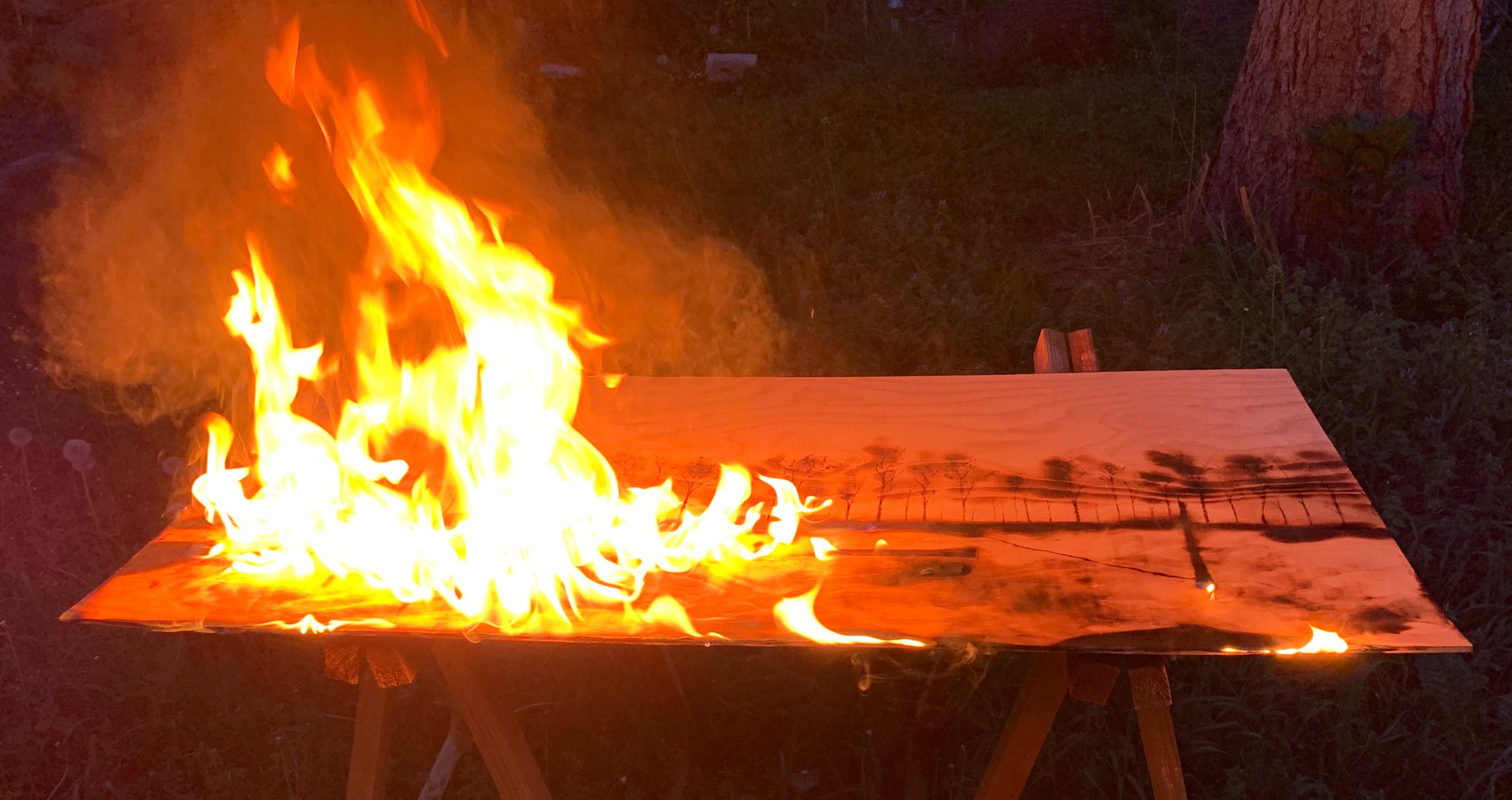
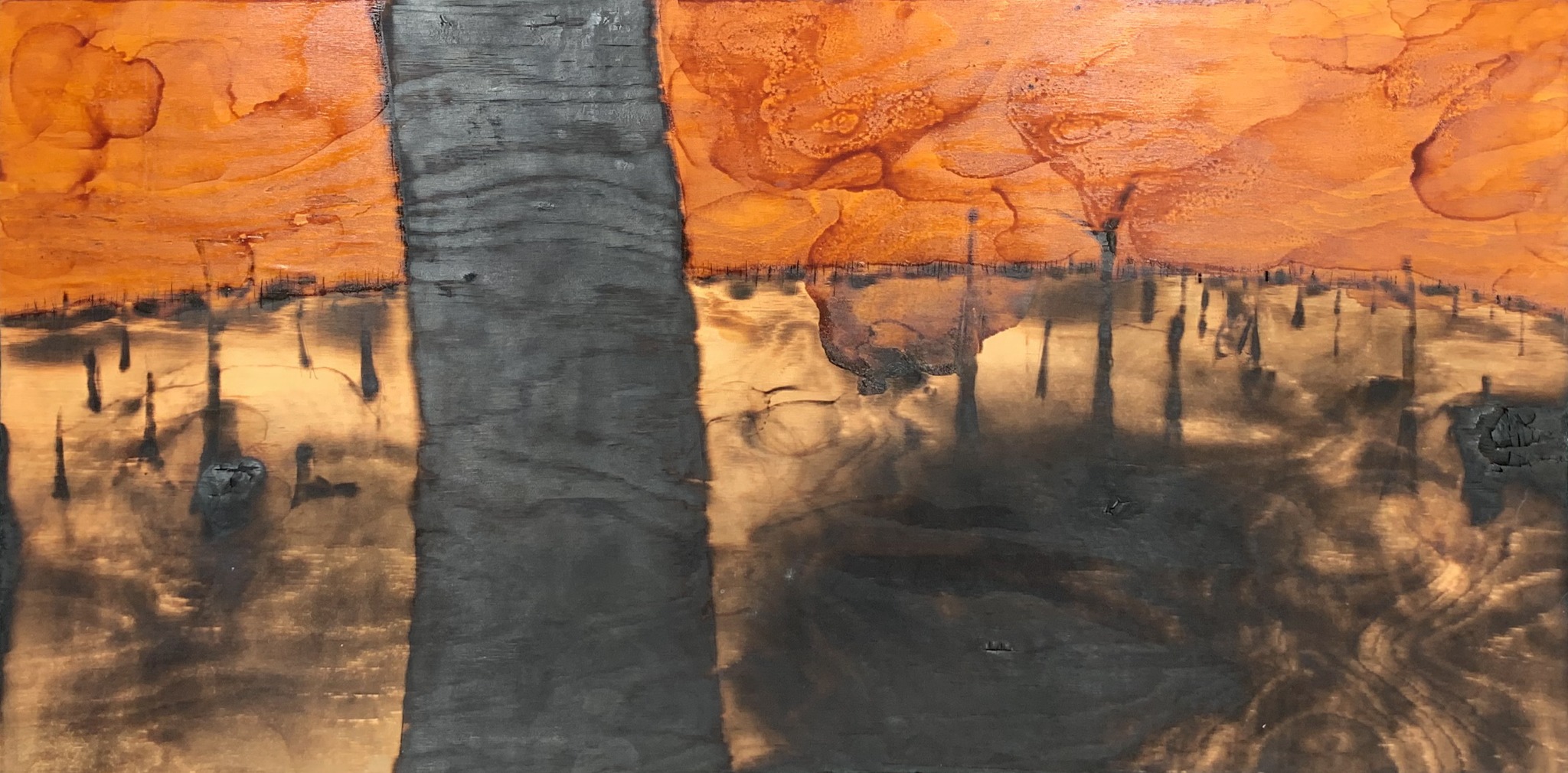
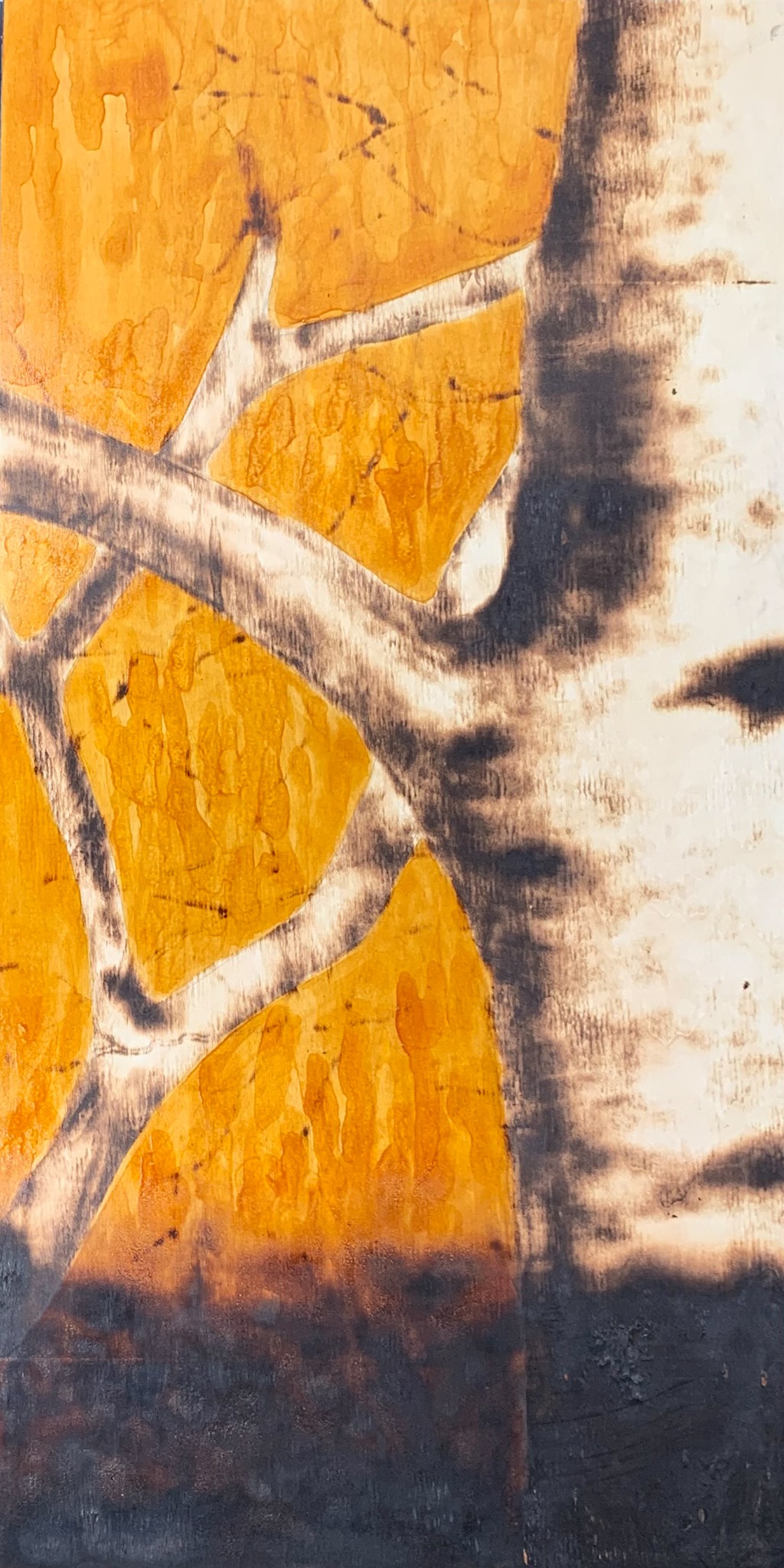
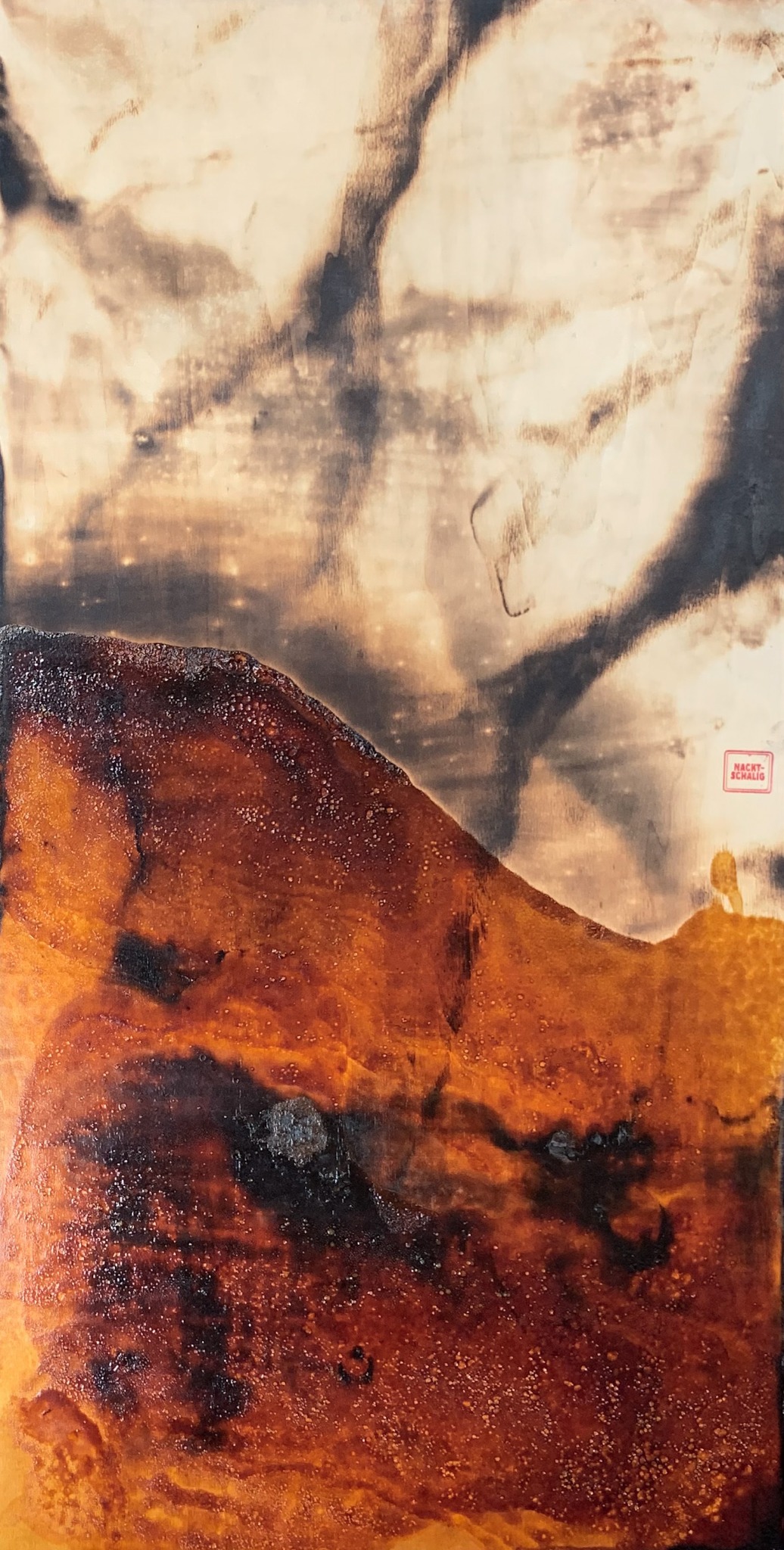
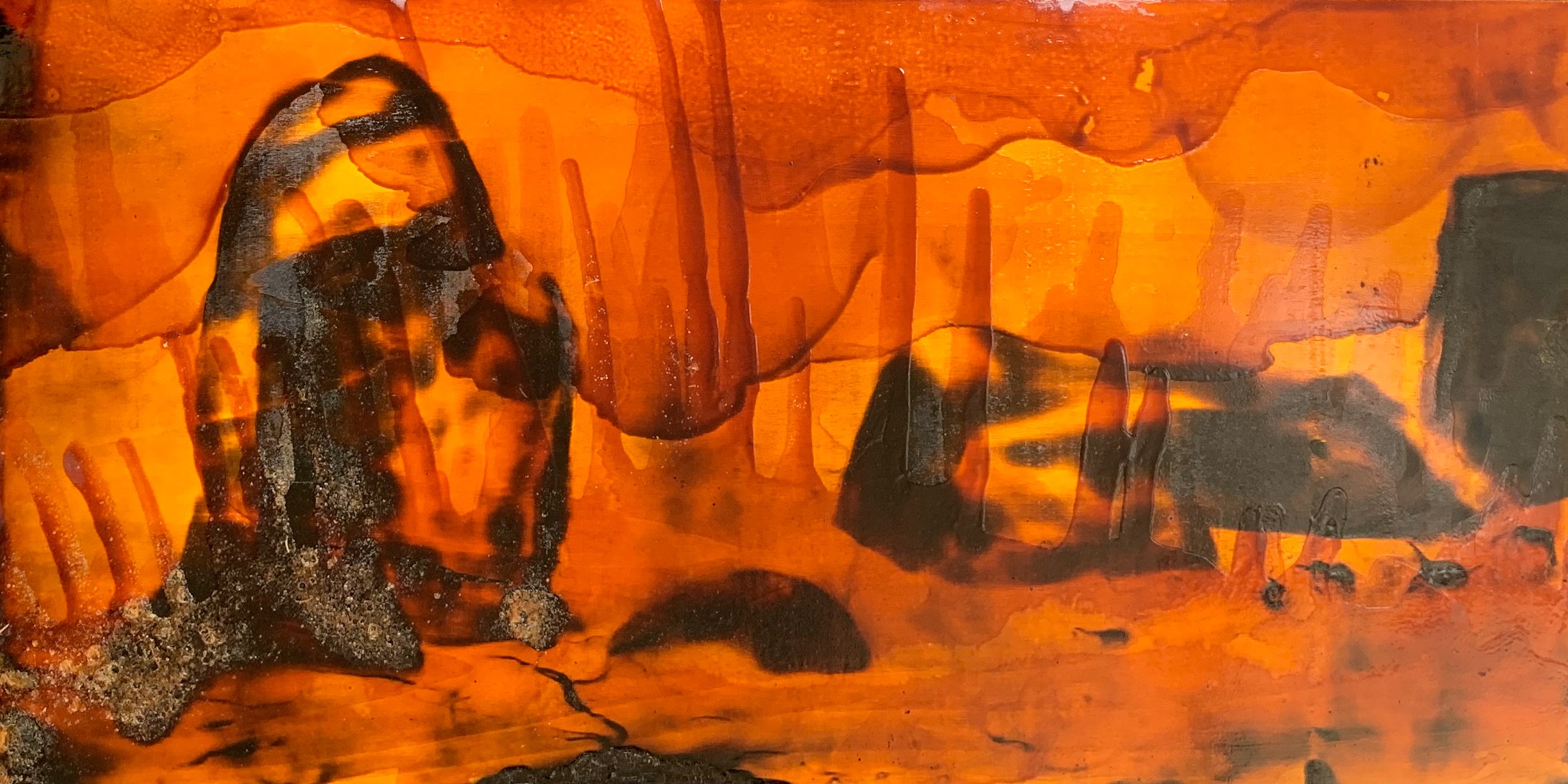
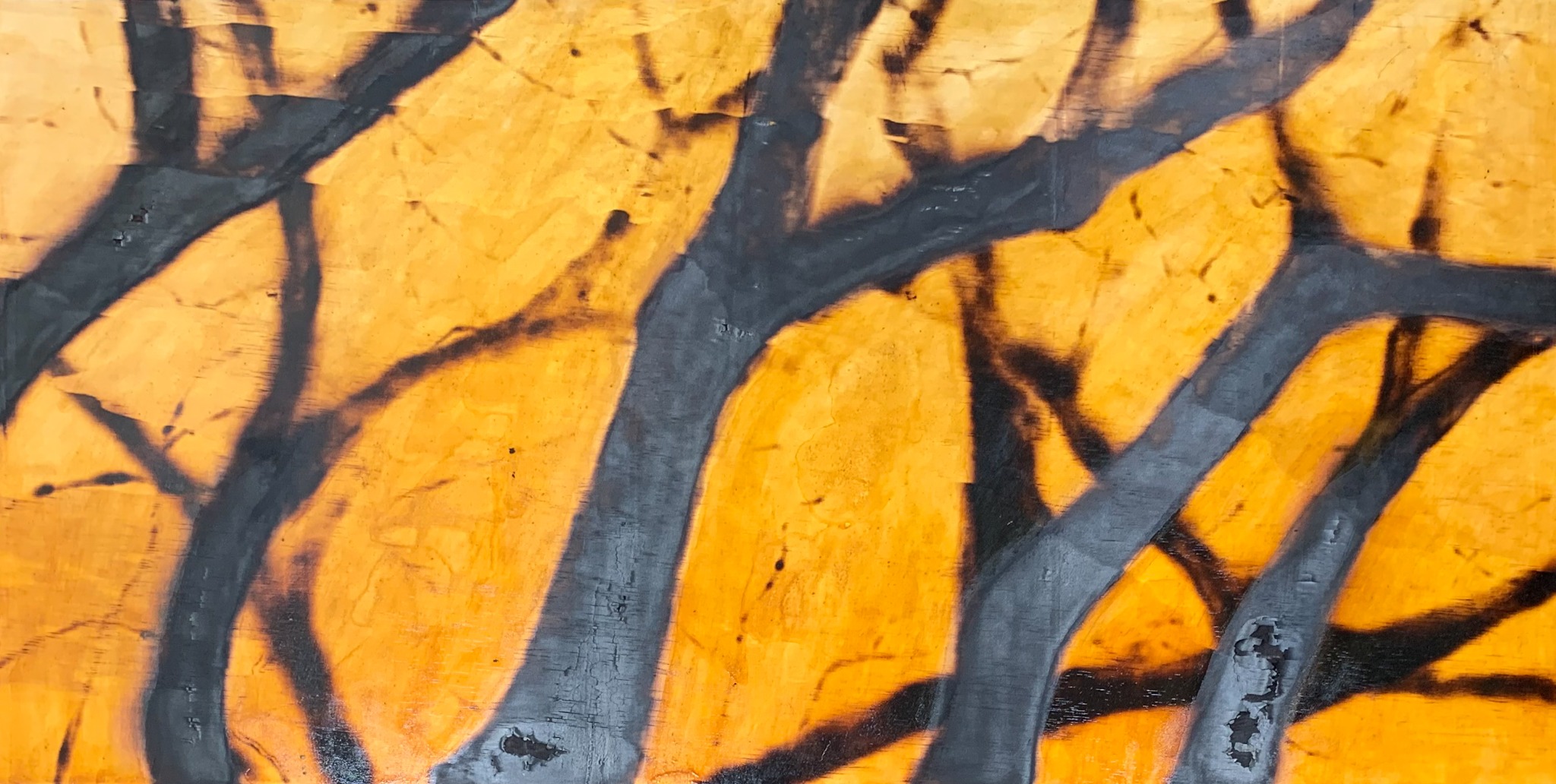
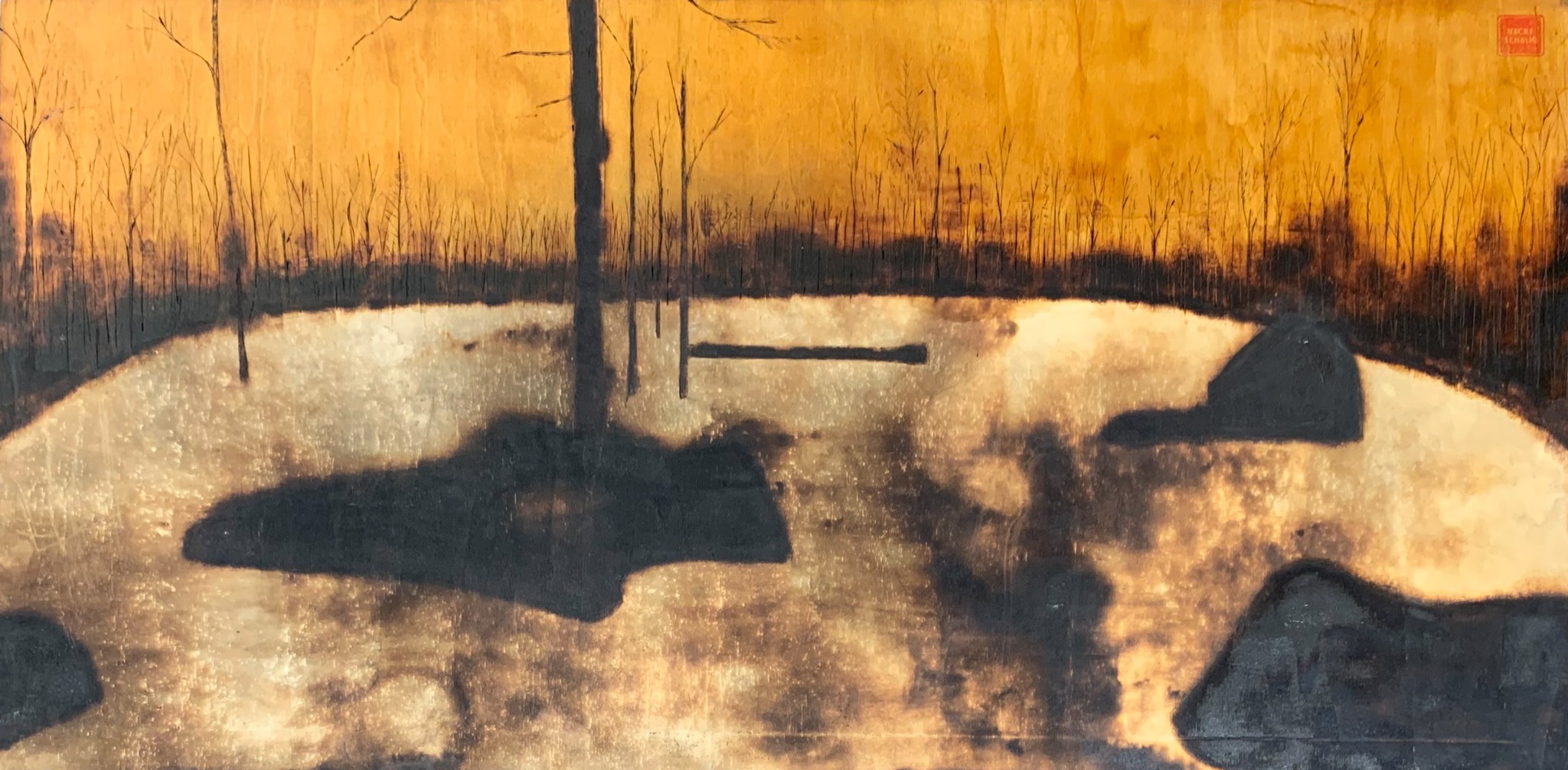
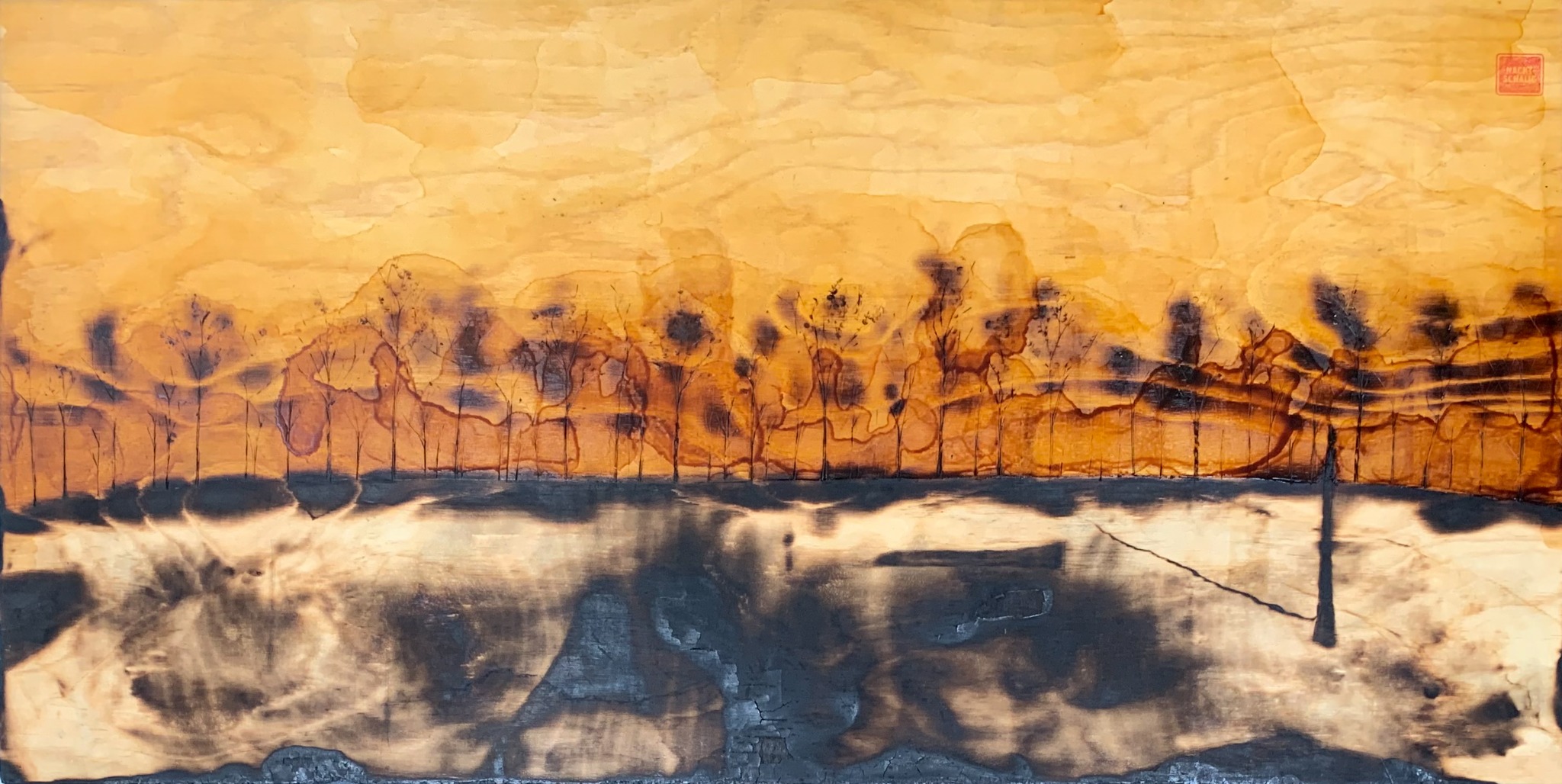
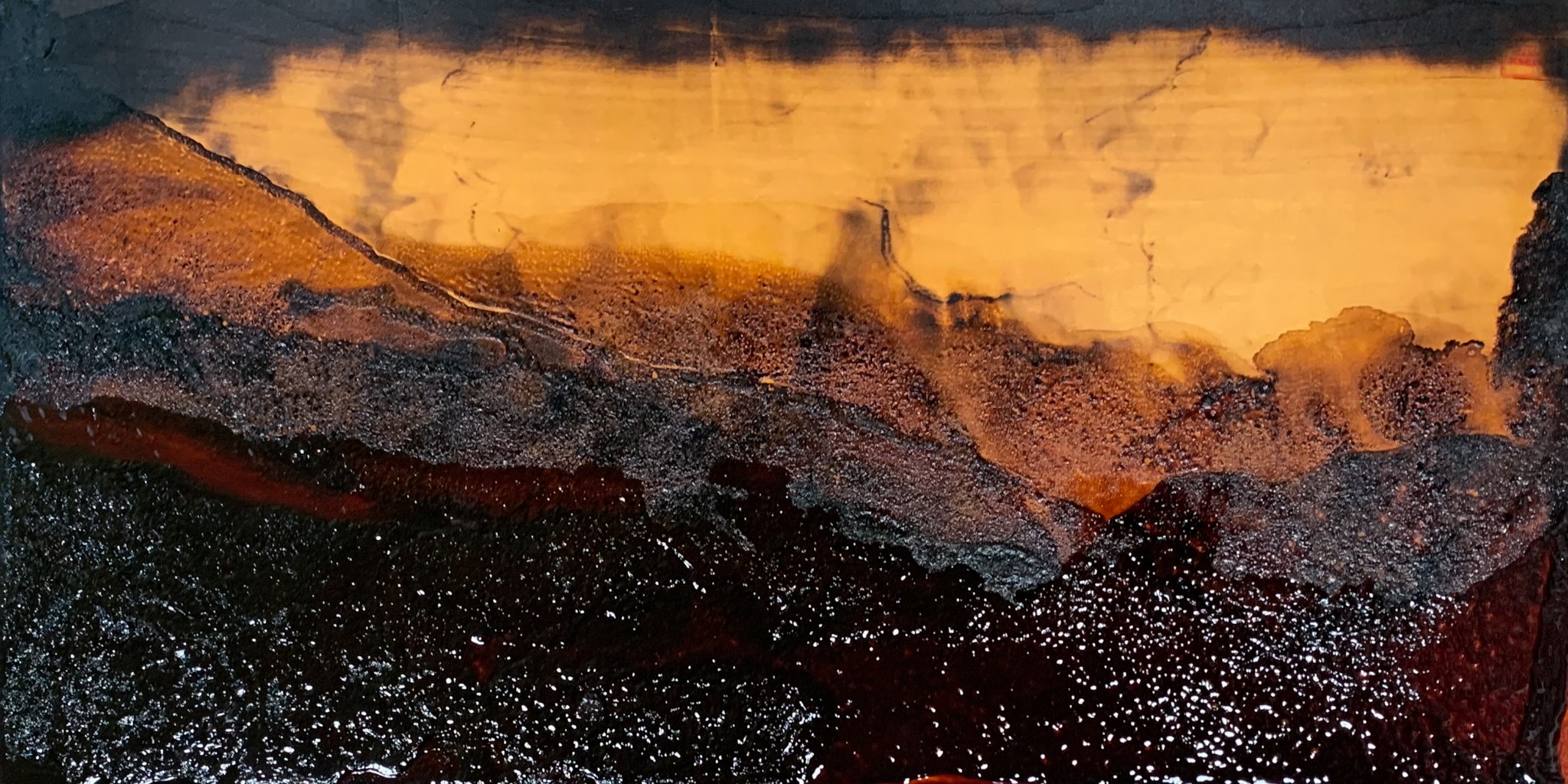
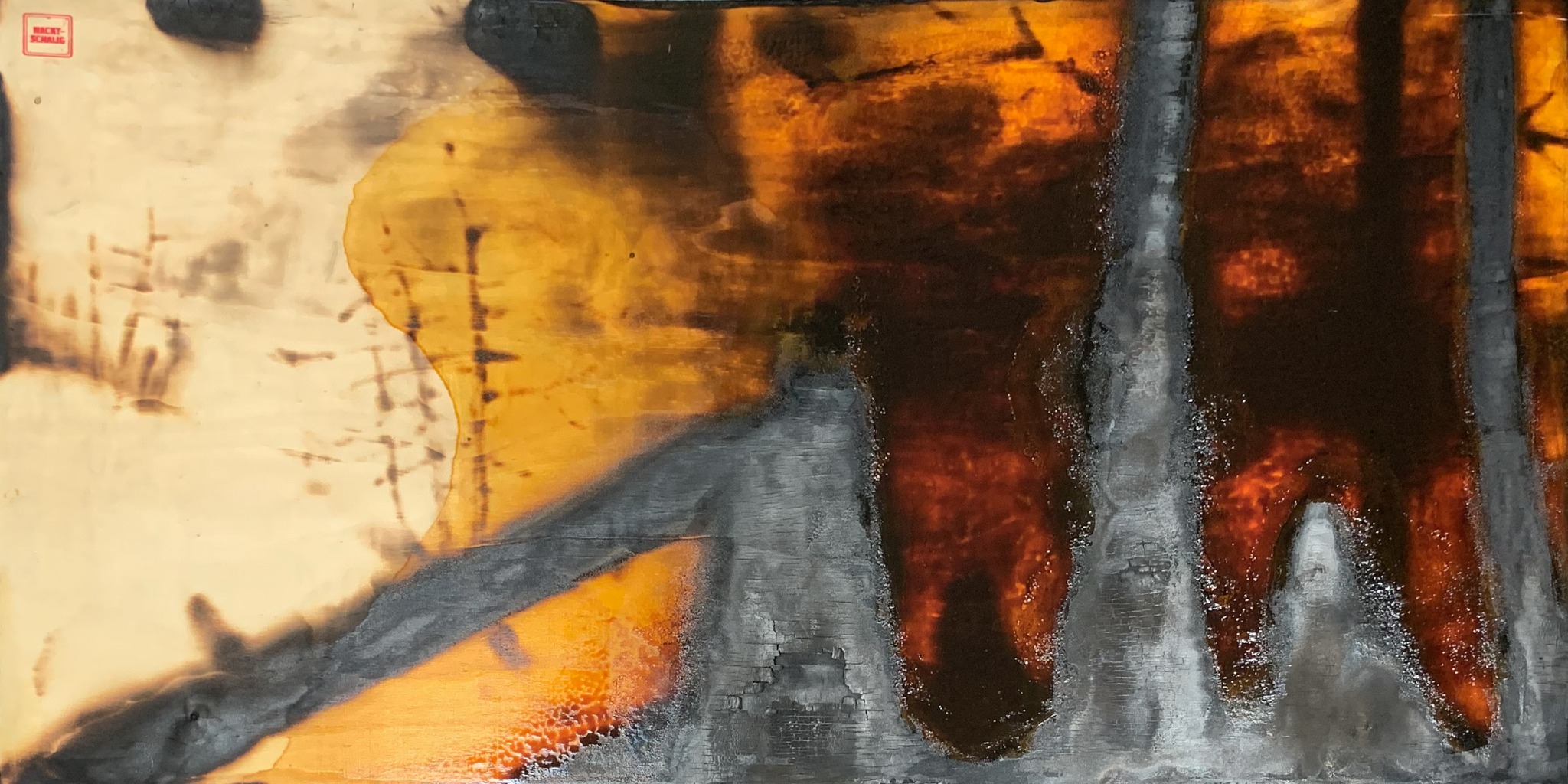
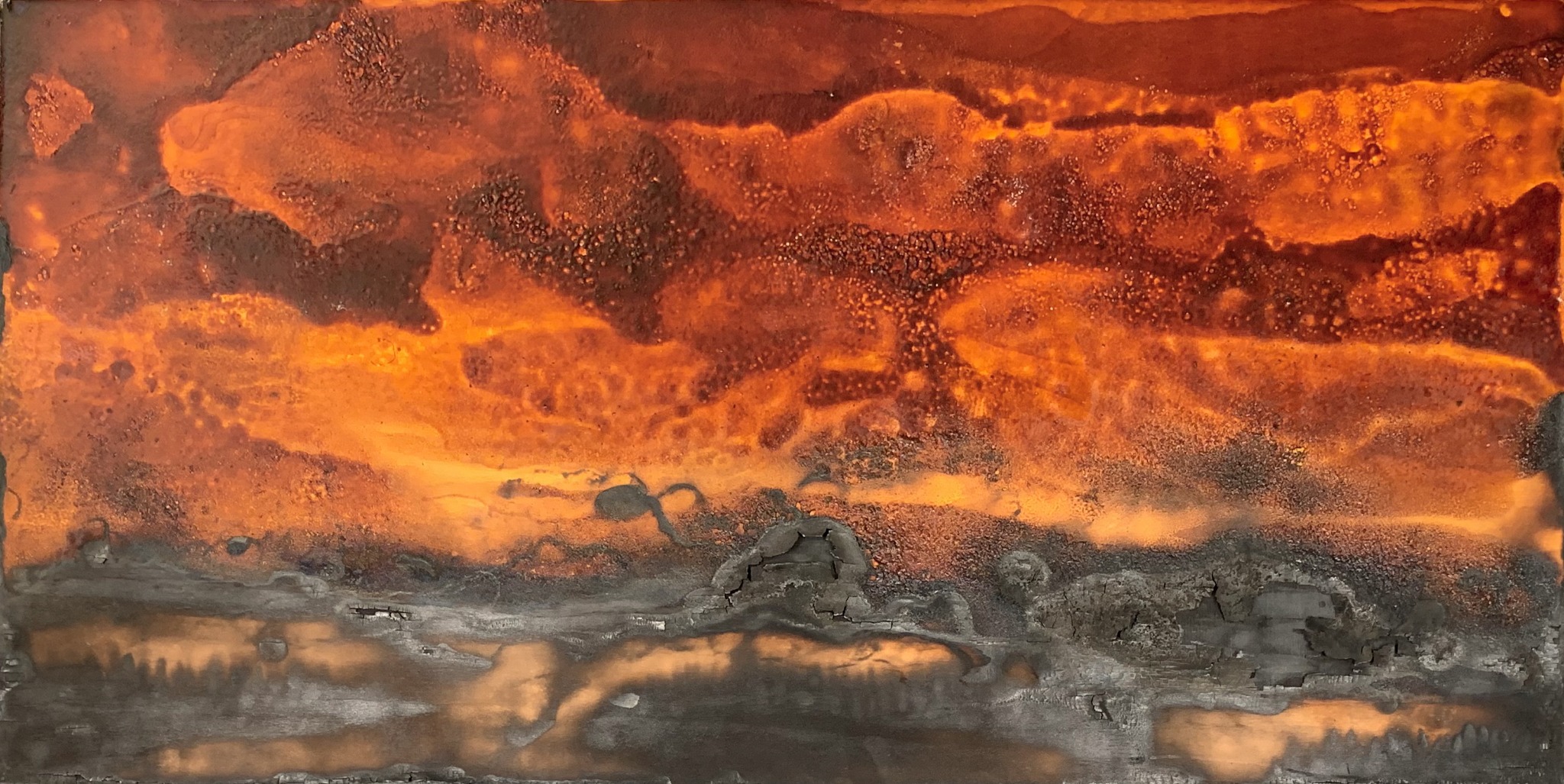
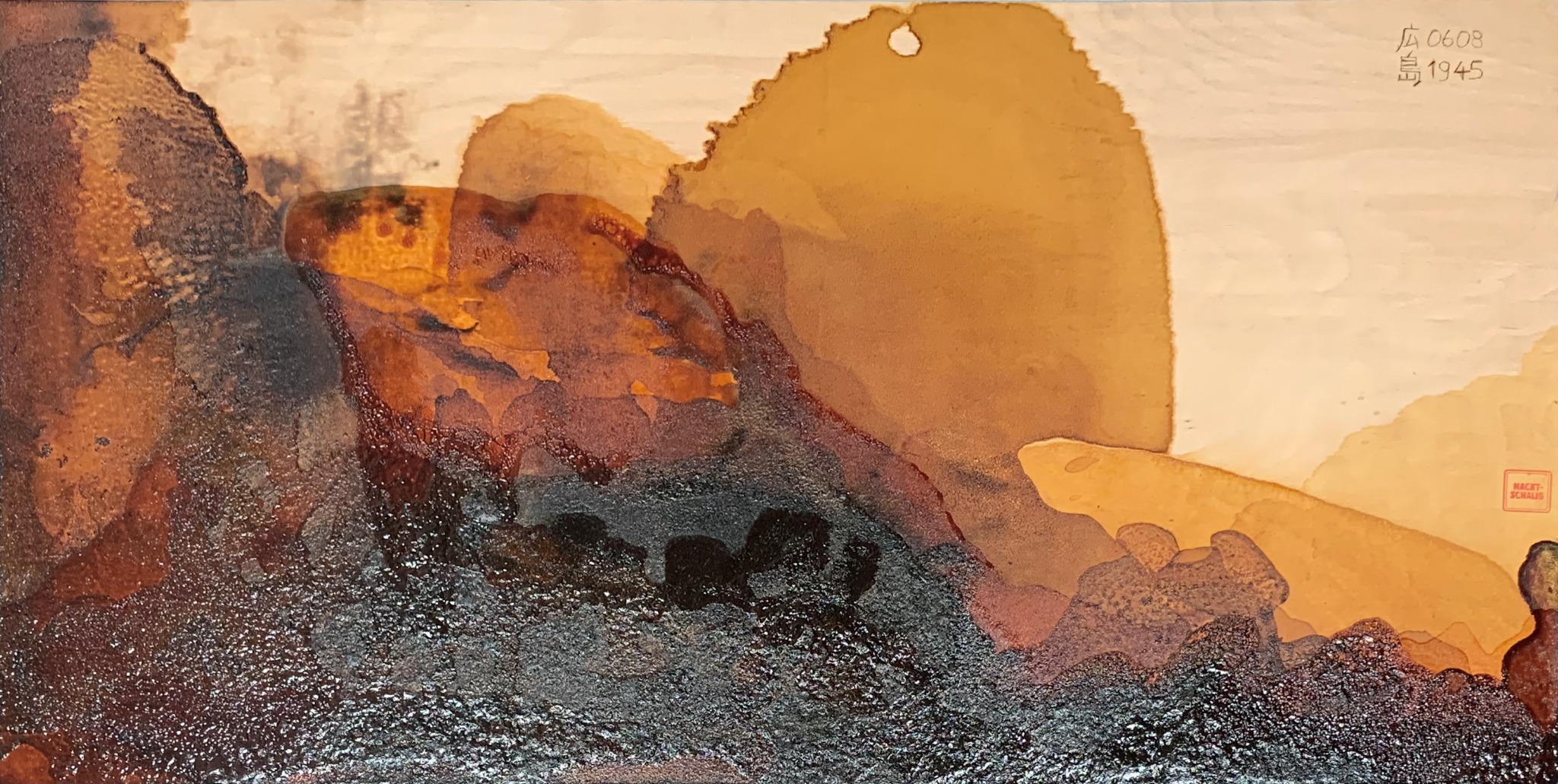
Die Werkgruppe Firescapes entsteht auf Holz. Feuer greift in die Oberfläche ein, schwärzt, zeichnet, zerstört und öffnet zugleich eine neue Bildschicht. Auf diese verbrannten oder angebrannten Flächen wird Schellack aufgetragen, gegossen, verdichtet oder gelöst. Je nach Konzentration, Fließverhalten und Wachsigkeitsgrad entstehen unterschiedliche Glanzzonen, Verläufe und Verdunkelungen.

Die Bilder beziehen sich auf Landschaften, die durch menschliche Eingriffe verändert oder verwundet wurden: durch Brandrodung, Landwirtschaft, Abbau, Rohstoffgewinnung, Vergiftung oder Krieg. Diese Vorlagen werden jedoch nicht illustrativ übernommen. Sie wirken als gedankliche und atmosphärische Ausgangspunkte.

Firescapes sind innere Landschaften nach der Zerstörung. Sie zeigen keine eindeutigen Orte, sondern Zustände: Hitze, Rückstand, Verdichtung, Narben, Sedimente, Rauch und Stille.
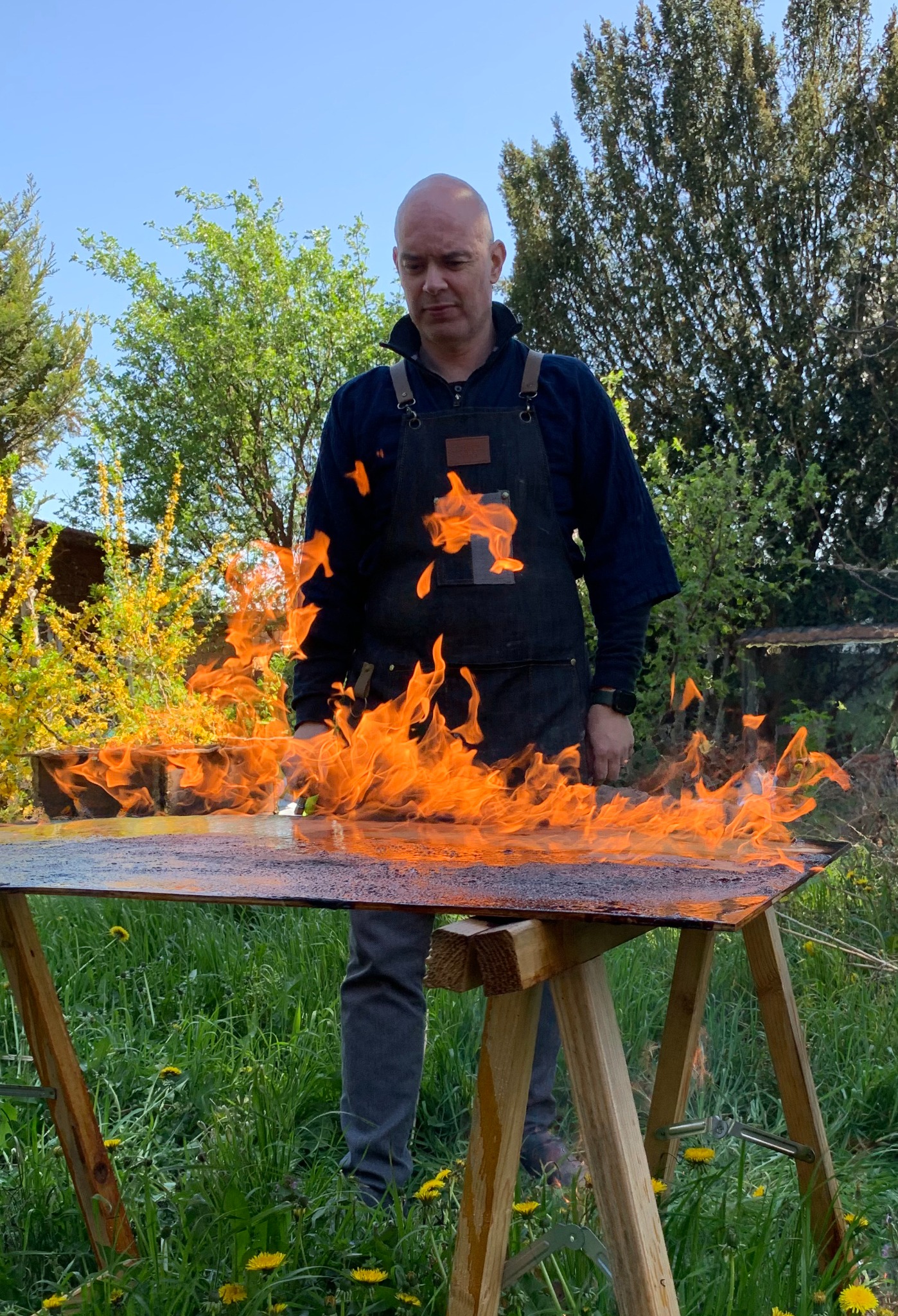
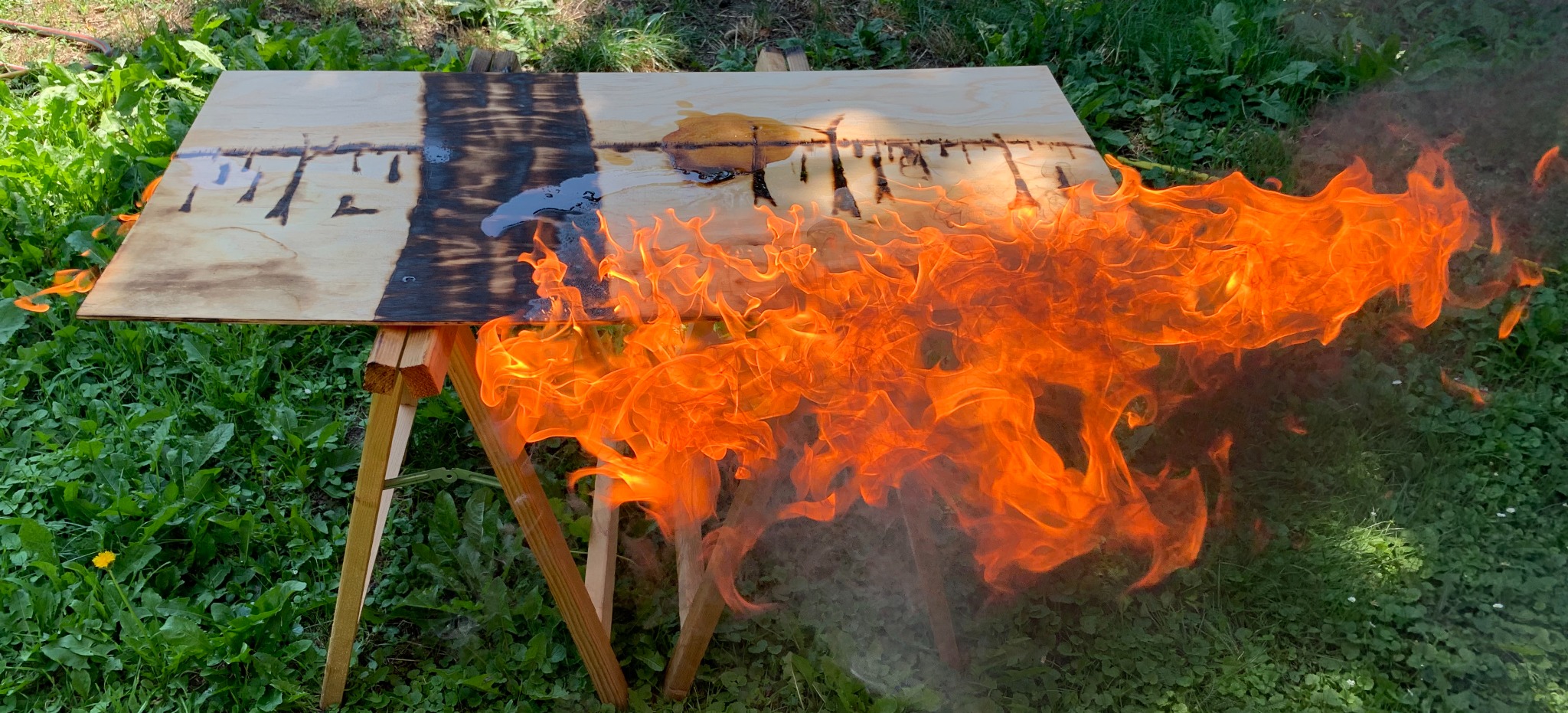
Entstehungsprozess der Werkgruppe Firescapes mit Feuer im Freien
Entstehungsprozess · Arbeit mit Feuer
Flammen auf einer Holzplatte während der Entstehung einer Firescape-Arbeit
Entstehungsprozess · Feuer auf Holz
Brennende Holzplatte im Entstehungsprozess der Werkgruppe Firescapes
Entstehungsprozess · kontrollierte Verbrennung
Werk / Installation

Verbrannter Atem

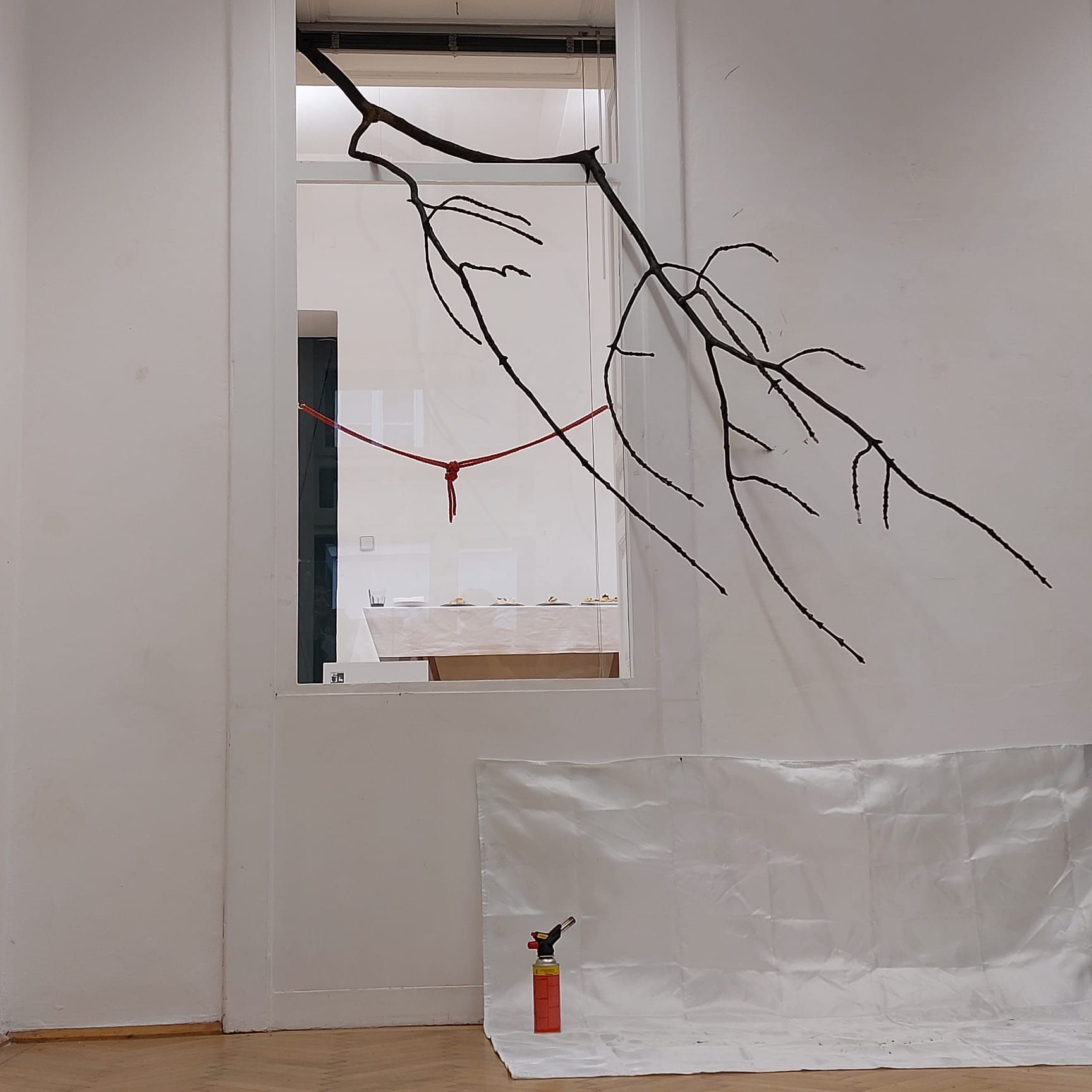
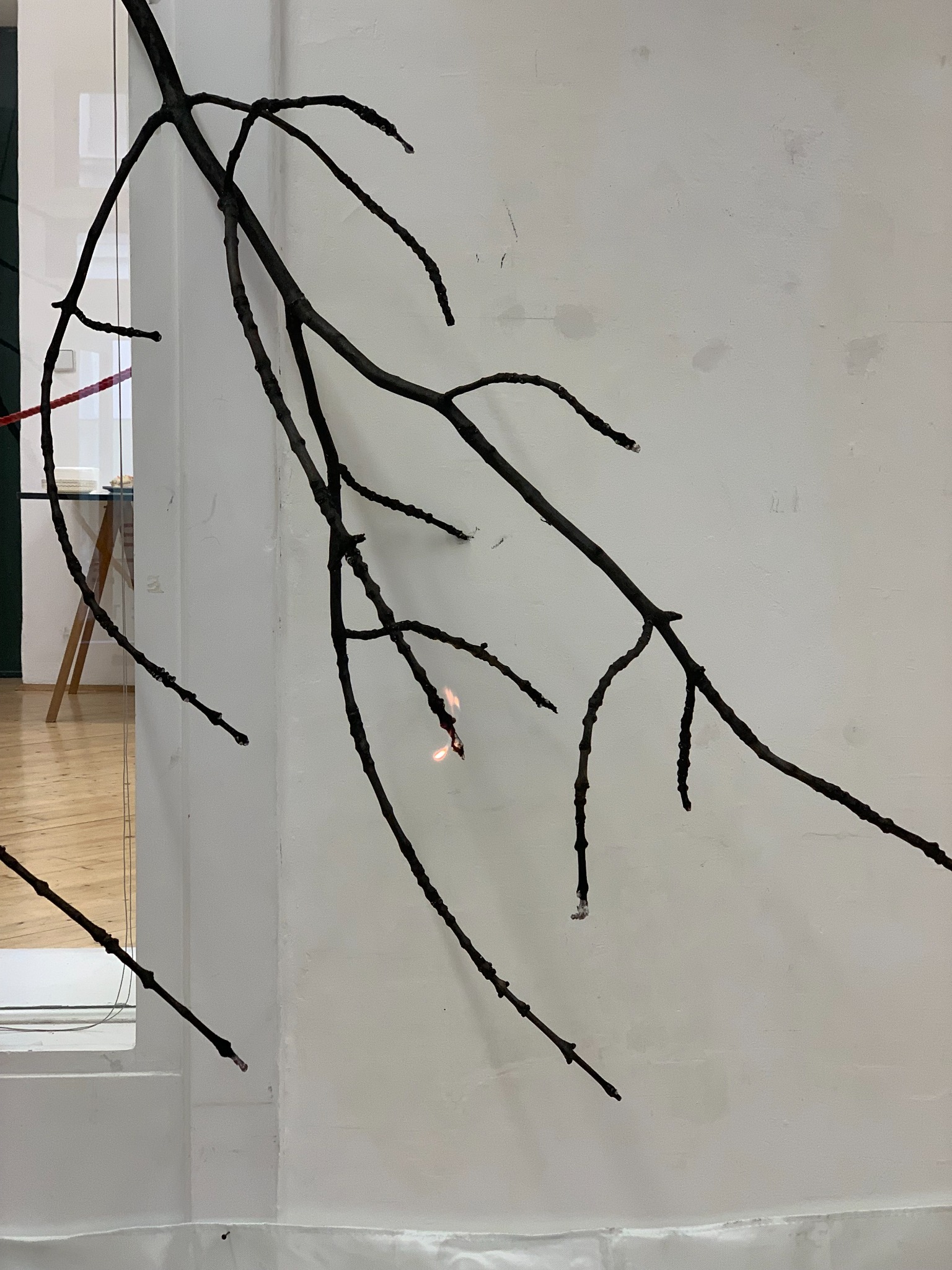
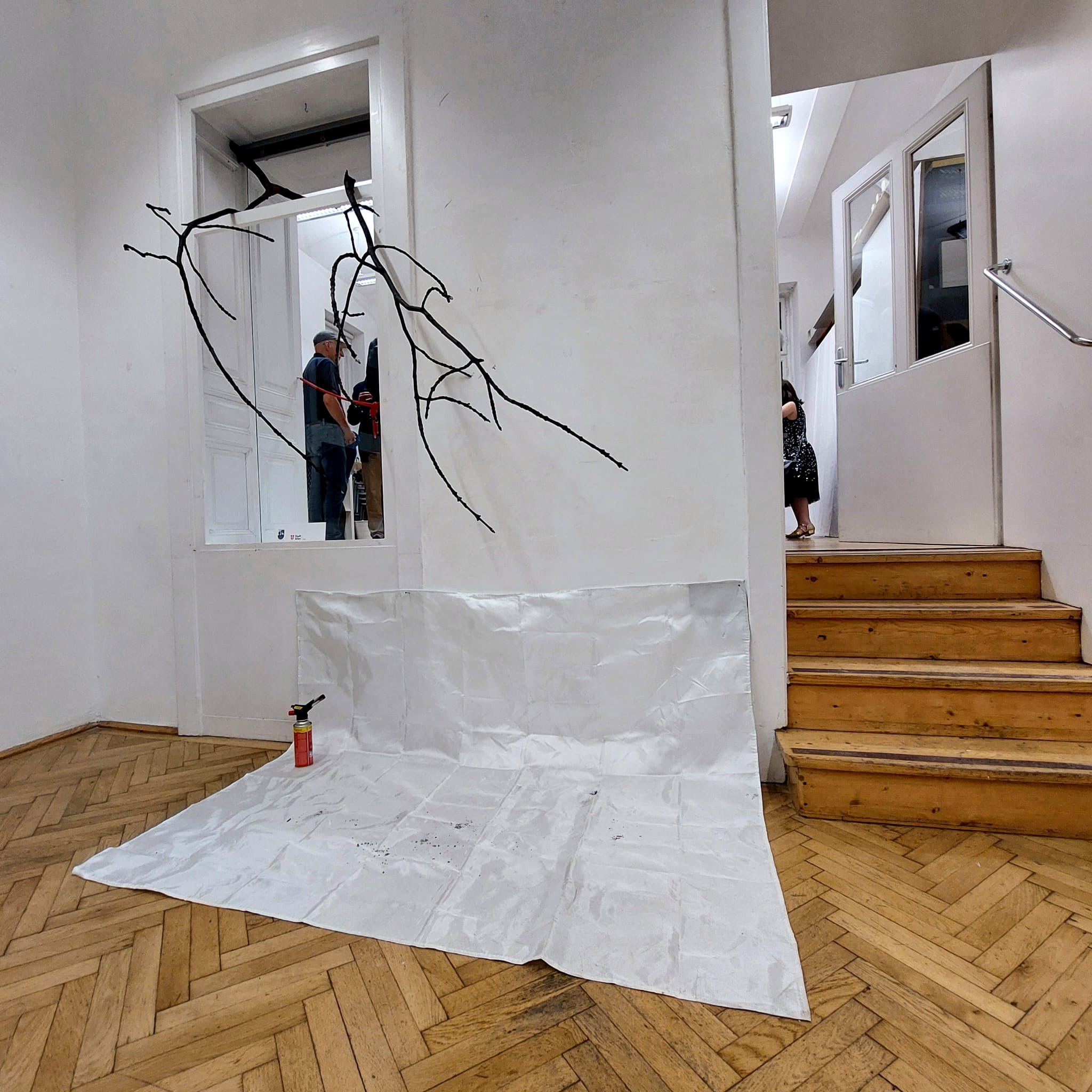
Verbrannter Atem ist eine Arbeit mit einem gefundenen Ast, Feuer und Asche. Der Ast wird oberflächlich verkohlt. Er glimmt langsam, fast wie Räucherwerk. Die Verbrennung ist nicht spektakulär, sondern leise, zeitlich gedehnt und körperlich wahrnehmbar.

Während des Prozesses fällt Asche auf eine helle Fläche. Diese Fläche wird zum Speicher der Handlung. Sie nimmt auf, was vom Ast übrig bleibt: Staub, Spur, Abdruck, Zeit. Die Arbeit verweist auf Erschöpfung und Verbrauch, aber auch auf Atem, Anwesenheit und Verwandlung.

Der verbrannte Ast steht nicht nur für eine beschädigte Natur. Er wird zu einem stillen Zeugen einer gemeinsamen Verletzlichkeit: der Landschaft, des Materials, des Körpers und der Wahrnehmung.
Günter Hainzl · Groups of works

Firescapes / Charred Breath

Works with fire, wood, shellac, ash and time. Landscape appears not as depiction, but as a trace of intervention, injury, transformation and possible renewal.

Introduction

About my work

In my work, landscape interests me not only as an external space, but as a vulnerable body, as memory and as process. Materials are not merely supports for an image. They act with the work. They react, change, resist and make time visible.

I work with natural pigments, wood, fire, shellac, ash and found traces. Images and objects emerge that move between painting, process, installation and documentation. The work cannot be fully controlled. It develops from an encounter between material, gesture, chance and concentration.

I am interested in an art that does not only show, but touches: through its surface, its vulnerability, its silence and its proximity to ecological questions. The works speak of destruction, exhaustion and change — but also of the possibility of finding a new attentiveness within the process of passing away.

Group of works

Firescapes

The group of works Firescapes is created on wood. Fire intervenes in the surface: it blackens, draws, destroys and at the same time opens a new pictorial layer. Shellac is applied, poured, condensed or dissolved on these burned or scorched surfaces. Depending on concentration, flow and wax content, different zones of gloss, gradients and darkenings appear.

The images refer to landscapes altered or wounded by human intervention: slash-and-burn practices, agriculture, excavation, extraction of raw materials, poisoning or war. These references are not adopted as illustrations. They act as conceptual and atmospheric points of departure.

Firescapes are inner landscapes after destruction. They do not show definite places, but states: heat, residue, compression, scars, sediments, smoke and silence.

Creation process of the Firescapes group of works with fire outdoors
Creation process · working with fire
Flames on a wooden panel during the creation of a Firescape work
Creation process · fire on wood
Burning wooden panel in the creation process of the Firescapes group of works
Creation process · controlled burning
Work / Installation

Charred Breath

Charred Breath is a work with a found branch, fire and ash. The branch is superficially charred. It glows slowly, almost like incense. The burning is not spectacular, but quiet, extended in time and physically perceptible.

During the process, ash falls onto a bright surface. This surface becomes a storage place for the action. It receives what remains of the branch: dust, trace, imprint, time. The work refers to exhaustion and consumption, but also to breath, presence and transformation.

The charred branch does not stand only for a damaged nature. It becomes a silent witness to a shared vulnerability: that of landscape, material, body and perception.

ギュンター・ハインツル · 作品群

Firescapes / 焼かれた呼吸

火、木、シェラック、灰、そして時間による作品。風景は単なる描写ではなく、介入、傷、変容、そして再生の可能性の痕跡として現れる。

序文

私の制作について

私の制作において、風景は外側に広がる空間であるだけではありません。それは傷つきやすい身体であり、記憶であり、ひとつのプロセスでもあります。素材は単なる画像の支持体ではなく、作品の中でともに作用します。反応し、変化し、抵抗し、時間を可視化します。

私は自然由来の顔料、木、火、シェラック、灰、そして見いだされた痕跡を用いて制作しています。そこから生まれるイメージやオブジェは、絵画、プロセス、インスタレーション、記録のあいだを行き来します。作品は完全には制御できません。素材、身振り、偶然、集中の出会いから展開していきます。

私が関心を寄せているのは、ただ見せるだけではなく、触れるように作用する芸術です。表面、傷つきやすさ、沈黙、そしてエコロジーへの問いに近いところから。作品は破壊、疲弊、変化について語ります。同時に、消えゆくプロセスの中に新たな注意深さを見いだす可能性についても語っています。

作品群

Firescapes

Firescapes は木の上に生まれる作品群です。火は表面に介入し、黒く染め、線を刻み、破壊しながら、同時に新しいイメージの層を開きます。焼かれた、あるいは焦がされた面にはシェラックが塗られ、注がれ、凝縮され、あるいは溶かされます。濃度、流れ方、含まれる蝋質の違いによって、光沢の領域、にじみ、暗がりが現れます。

これらのイメージは、人間の介入によって変化し傷つけられた風景に関係しています。焼畑、農業、掘削、資源採取、汚染、戦争。けれども、それらは説明的な図像として写し取られるのではありません。思考と空気の出発点として働きます。

Firescapes は破壊の後の内的な風景です。そこに明確な場所が描かれているのではなく、熱、残余、圧縮、傷跡、堆積、煙、沈黙といった状態が現れています。

屋外で火を用いて制作するFirescapesの制作過程
制作過程 · 火とともに作業する
Firescape作品の制作中、木板の上に燃え上がる炎
制作過程 · 木の上の火
Firescapes作品群の制作過程における木板の燃焼
制作過程 · 制御された燃焼
作品 / インスタレーション

焼かれた呼吸

焼かれた呼吸 は、見いだされた枝、火、灰による作品です。枝は表面だけが炭化されます。それは香のように、ゆっくりと微かに燃えます。燃焼は劇的なものではなく、静かで、時間の中に引き延ばされ、身体的に感じられるものです。

その過程で、灰は明るい面の上に落ちます。その面は行為の記憶装置になります。枝から残ったもの、すなわち塵、痕跡、刻印、時間を受け止めます。この作品は疲弊と消費を指し示すと同時に、呼吸、存在、変容にも触れています。

焼かれた枝は、損なわれた自然だけを表しているのではありません。それは風景、素材、身体、知覚に共通する傷つきやすさの、静かな証人となります。